From Milan, ITA
(February 7, 2026) – The Court of Arbirtration for Sport has upheld the International Bobsleigh and Skeleton Federation ban on Great Britain’s skeleton helmets.
On February 2, British Bobsleigh & Skeleton appealed a decision by the IBSF on January 29 that stated that the British helmets did not comply with IBSF Skeleton Rules based on the shape of the helmet. The BBSA argued that the helmet met all rigorous safety standards.
— Original Story – BBSA Files Appeal Over Helmets —
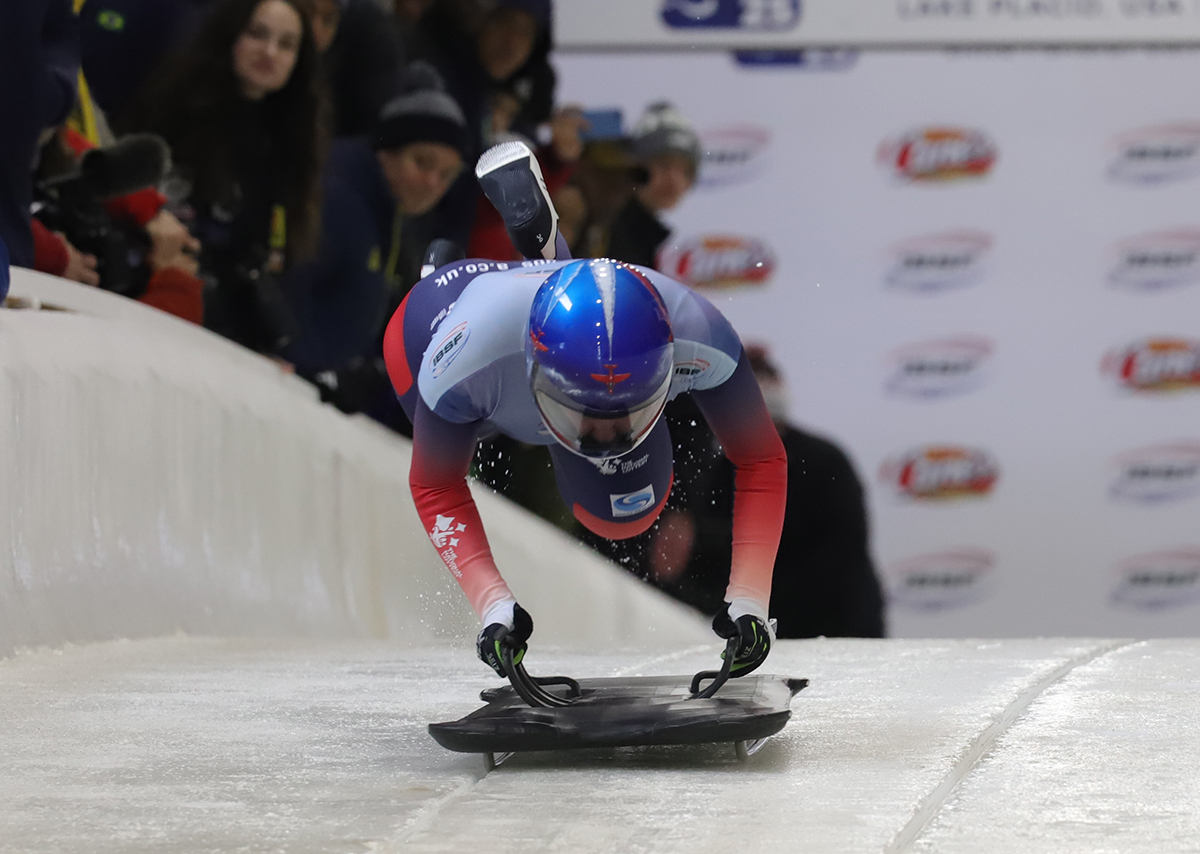
CAS held a hearing on February 5 with technical experts in attendance. The BBSA argued that the helmet is compliant because it is manufactured without any extra elements of the helmet attached to it and does not have any aerodynamic modifications.
In turn, the IBSF argued that based on the overall shape and design, the helmet has prohibited spoilers and protruding edges or aerodynamic elements and thus does not comply with the current IBSF rules.
In the original CAS release, the BBSA had asked that CAS declare that “the Team GB helmet is proven to be safer and more beneficial to athletes’ health and safety than other helmets being used.”
In their release, the CAS Ad Hoc Division Panel emphasized that it is not tasked with determining if the helmet is an improvement over current equipment, but instead to assess if the BBSA was complying with the IBSF rules as they stood for the 2026 Olympic Games.
The CAS panel noted the BBSA helmet “departs from the standard shape and reflects a novel design specifically developed to enhance aerodynamic performance.” The Panel thus determined that the BBSA didn’t fully establish that the helmet complies with the IBSF rules and thus the appeal was dismissed.
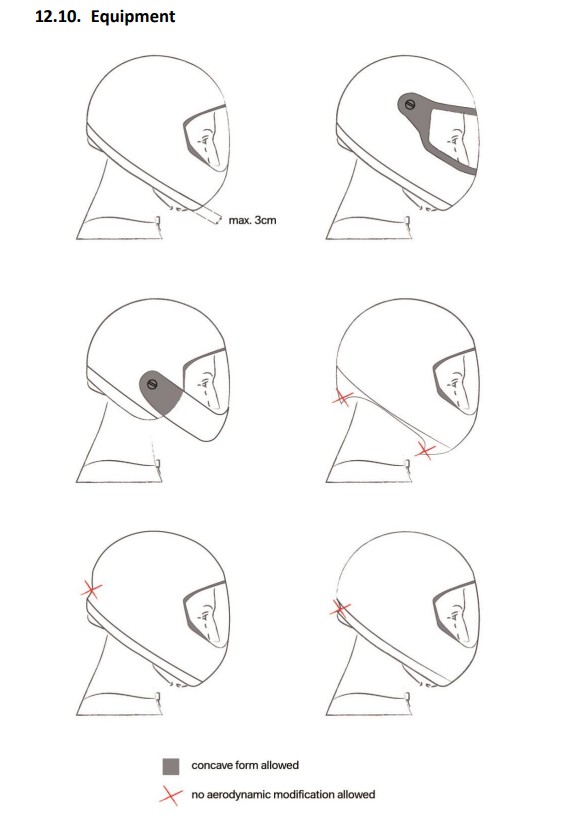
Great Britain will have to use the helmets that they’d used throughout the 2025/2026 World Cup season which did comply with all rules. Those rules are below, along with imagery from the IBSF Rule Book.
10.16. Other Equipment
10.16.1. Helmet
Wearing of a safety helmet is mandatory for all competitions, during both training and races. It is the duty and the responsibility of the National Federations to comply with the safety standards.
Only helmets whose shell and padding cover the head and at least the ear area are allowed.
Helmets with spoilers or protruding edges are not allowed.
The bottom edge of the helmet shell must maintain the shape of the helmets normally available on the market. Chin guards and clasps are not allowed to be positioned excessively low.
The chin guard, the visor and the hardware for attaching them are the only protruding elements allowed. These elements cannot, however, have aerodynamic coverings. For safety reasons, all helmets must have a smooth surface.
A safety helmet
a) has to be without any additionally attached aerodynamic elements or adhesive
tape (except that used to fix the visor or the goggle strap), and
b) one piece of adhesive tape is allowed on the chin guard with a maximum size of
50mm x 70mm.
c) One piece of foam padding may be added on the chin strap with adhesive tape,
the addition may not exceed a maximum size of 100mm along the length of the
strap with 50mm width and 6mm thickness.
d) On the inside of the chin guard padding may be applied but may not exceed a
maximum size of 50mm width with 10mm thickness, according to Figure 8 &
8a.
e) the helmet shell must not have any concave shape except for the recesses for
the visor, and
f) the padding may protrude a maximum of 3 cm below the shell.
Additional requirements for the coming 2026/2027 season are as follows:
Helmet model must meet ASTM 2040 and EN 1077 (Class A) and be certified under
both.
In addition, the helmet model must pass an additional specific test under EN 1077 test
methods, but at a higher test speed of 6.8 m/s
Diagram from IBSF Rulebook