
From Milan, ITA
(January 30, 2026) – The Court of Arbitration for Sport (CAS) has registered its first two cases for the 2026 Olympic Winter Games, and both involve sliding sport athletes.
The first, brought forth by USA’s Katie Uhlaender against Bobsleigh Canada Skeleton (BCS), Canadian coach Joe Cecchini, and the IBSF, involves Uhlaender’s qualification efforts for the Olympics. Uhlaender first brought a complaint to the IBSF regarding Cecchini deciding to pull four athletes from the final pre-Olympic North American Cup (NAC) skeleton race. That decision lowered the field from a full point paying 21+ athletes to 19, reducing the available point total for a victory from 120 to 75. Uhlaender won the event, but in receiving fewer points she fell 18 points short of what was needed to qualify into the games ahead of teammate Mystique Ro.
When an appeal was initially brought to the IBSF Integrity Unit, the federation ruled that while “the Canadian coach and the National Federation shall be reminded that, whilst acting within the letter of the IBSF Code of Conduct, it is expected that all parties concerned should also act within the spirit of the Code, whose aim is to promote fair play and ethical conduct at all times,” it dismissed the appeal as nothing BCS had done was technically against the rules.
Uhlaender then brought the case to the IBSF Appeals Tribunal, the final say-so for the IBSF, who said it did not have the authority to modify results of the race and thus couldn’t do anything.
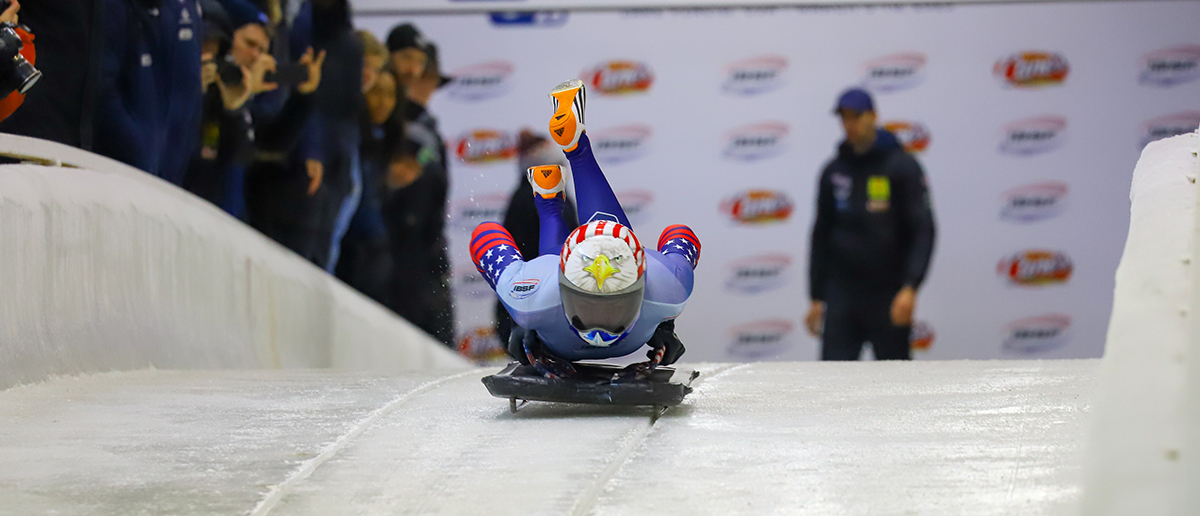
The American slider is requesting CAS determine whether the BCS decision to withdraw its athletes was in violation of the Olympic Movement Code on the Prevention of the Manipulation of Competitions. She is requesting full ranking points be awarded for the race, which would move her higher up in the IBSF Rankings List, which is used to determine the number of sleds a nation gets into the Olympics, as well as how some nations decide who will be racing in the Games.
The appeal, per CAS, does not appear to request a “wildcard” 26th sled into the Olympic skeleton race, which was what was requested by Uhlaender and the US Olympic and Paralympic Committee (USOPC) when they initially went to the IOC. USA Bobsled and Skeleton has not commented on the matter, but if Uhlaender’s appeal to CAS is upheld the federation would need to decide if Uhlaender would take the place of Ro in the Games.
In the second sliding sport appeal to CAS, the Irish Luge Federation (ILF) has filed an appeal against the FIL challenging the granting of a qualification spot to one of the Russian Individual Neutral Athletes (AIN), Daria Olesik.
In the FIL’s Olympic qualifications standards, athletes ranked outside of the top 30 in men’s or women’s luge need to complete extra requirements to be qualified for the games if they do get in via points. Among those are “…complete a minimum of ten timed runs on the selected Sliding Center Olympic track’s Olympic race start height of the pre-Olympic season before January 12, as well as start in two World Cup (or Nation’s Cup) races between January 1 and January 12, or one race plus a minimum of 20 training runs approved by the FIL during that period.
Olesik only competed in the one race during that period in Winterberg.

The FIL does carve out a possibility for an exception where the athlete has an extra week to get these requirements in, it is unclear if that request had been made.
In turn, ILF and Desmond argue that the FIL unlawfully gave a qualification place to Olesik.
Desmond was the first slider out in the Olympic qualifications, falling 13 points short behind Ioana-Corina Buzatoiu. If Olesik’s position is negated, then Desmond would receive that position.
As with all Ad Hoc Division cases with CAS, the turnaround time on a decision comes much quicker than a regular appeal.